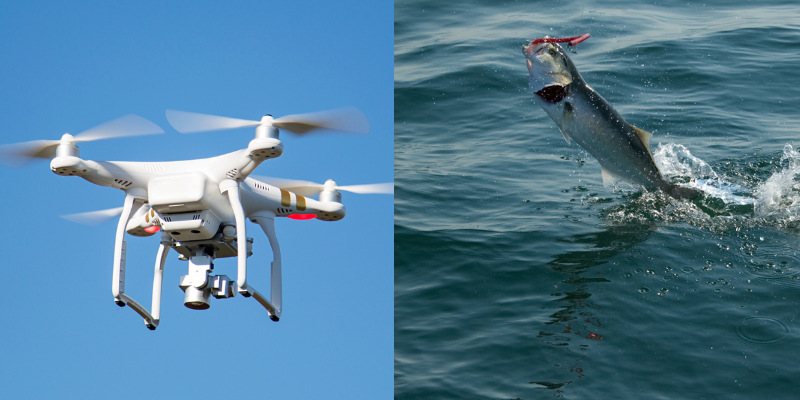
With drones becoming more affordable and widely used, many Texas anglers have been asking the same question: Can you legally use a drone to deploy bait while fishing?
The short answer is no, and Texas Parks and Wildlife officials have now clearly explained why.
Drone Fishing in Texas: What the Law Actually Says
According to the Texas Parks and Wildlife Department (TPWD), the use of drones – formally referred to as Unmanned Aircraft Systems (UAS) – to assist with fishing is prohibited under federal law, not just state rules.
TPWD reviewed Title 50 of the Code of Federal Regulations § 19.11, commonly known as the Federal Airborne Hunting Act (AHA). Enacted in 1956 and enforced by the U.S. Fish and Wildlife Service, the law makes it illegal to use any aircraft to take or attempt to take wildlife.
And yes – fish are legally defined as wildlife.
Why Drones Count as “Aircraft”
Under federal definitions:
- Aircraft means any contrivance used for flight in the air
- Wildlife includes fish, crustaceans, mollusks, and more
- Take includes pursuing, capturing, or attempting to capture wildlife
That means using a drone to drop bait offshore, beyond casting distance, or into a specific area is considered aiding in the take of wildlife – which is prohibited.
Can Texas Issue Special Permits for Drone Fishing?
No. Federal law explicitly prevents states from issuing permits that would allow aircraft-assisted sport fishing. TPWD cannot authorize drone fishing even if it wanted to.
If you’re surf fishing, bank fishing, or recreational fishing anywhere in Texas, drone-assisted bait deployment is illegal.
For the most up-to-date regulations, TPWD recommends visiting tpwd.texas.gov before heading out.
Enforcement & Reporting Violations
Texas Game Wardens are responsible for enforcing fishing, hunting, and wildlife laws across the state. If you witness a violation involving drones, fishing, or wildlife:
- 📞 Call 1-800-792-GAME (4263)
- 📱 Text TXOGT plus your tip to 847411
- 📲 Use the Texas OGT App (iOS & Android)
Reports can be made 24/7 through Operation Game Thief, Texas’ wildlife crime-stoppers program.
Public Access Highlight: Guadalupe River Trout Fishing Opens This Winter

While drones are off-limits, Texas anglers still have plenty of exciting — and legal — opportunities this winter.
TPWD has announced free public access to a prime stretch of the Guadalupe River for rainbow trout fishing during peak stocking season.
Camp Huaco Springs: What Anglers Can Expect
Located between New Braunfels and Sattler, Camp Huaco Springs offers:
- Nearly ½ mile of riverbank access
- Wade fishing upstream and downstream
- Alternating pools and riffles
- Access to a low-water dam and deep holding pools
- Launch areas for non-motorized boats, kayaks, and canoes
Public access runs December 5 through March 7, from 30 minutes before sunrise to 30 minutes after sunset.
Trout Stocking Details
TPWD will stock nearly 20,000 rainbow trout in the Canyon Tailrace section of the Guadalupe River from early December through late January. This includes:
- Weekly stockings
- Additional fish supplied by the Water-Oriented Recreation District of Comal County
- Supplemental stockings by the Guadalupe River Trout Unlimited Chapter (often larger trout)
Anglers are encouraged to check the 2025–26 Trout Stocking Schedule online before heading out.
Regulations & Licensing
- Daily bag limit: 5 trout
- No minimum length limit
- Anglers 17+ must have a valid Texas fishing license with a freshwater endorsement
- Special regulations apply in certain river sections downstream of Canyon Dam
📍 Camp Huaco Springs Address:
4150 River Road, New Braunfels, TX
To find more leased river access locations across Texas, visit TPWD’s River Access and Conservation Areas (RACA) program online.
Download the FishVerify app to quickly check fishing regulations, identify species, and stay compliant wherever you fish in Texas.

Curious how drones are changing the fishing world and what that means for you? To learn more about drones and fishing from both a tech and legal perspective, see our detailed guide Angling with Drones: What You Need to Know.